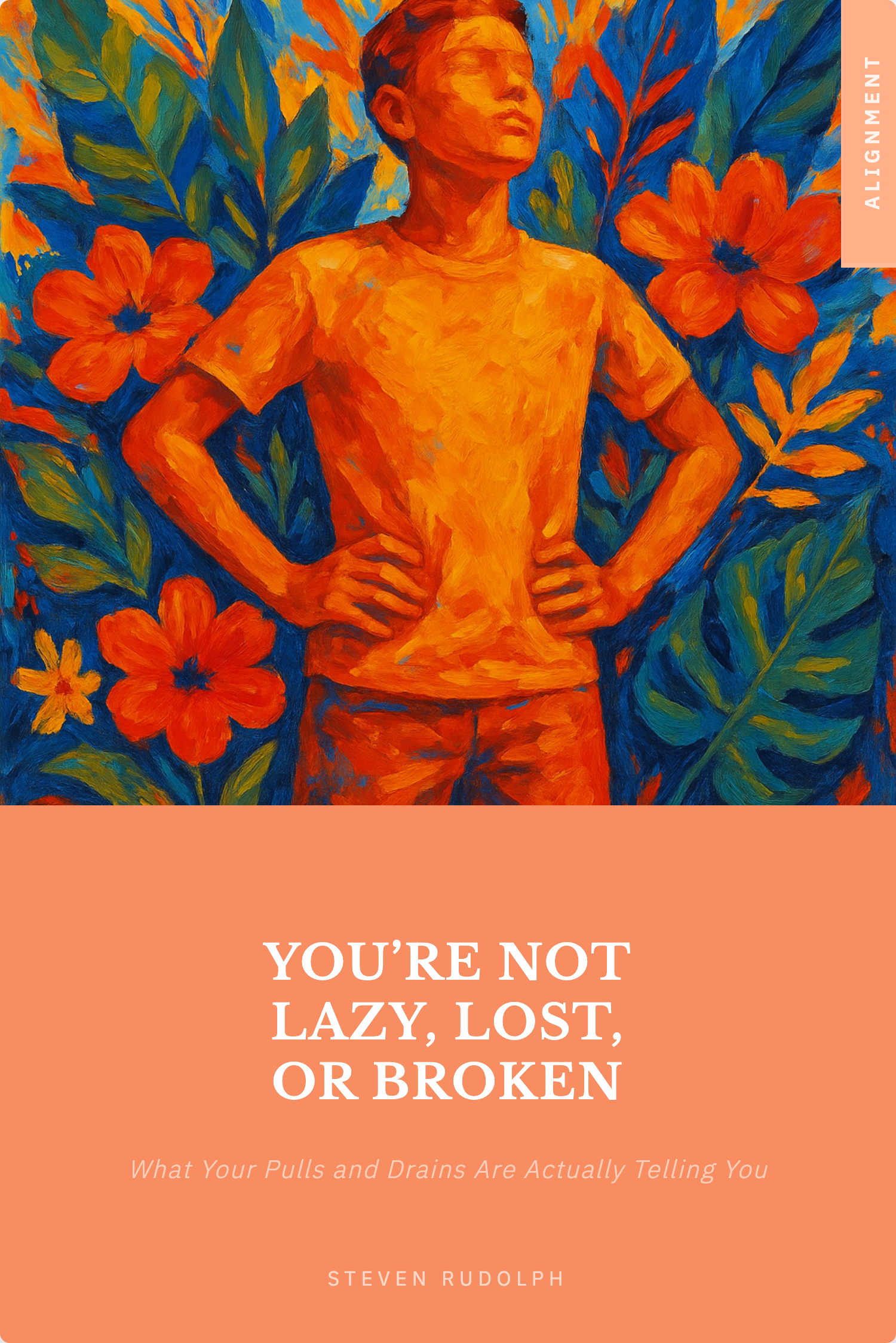
You’re Not Lazy, Lost, or Broken
What Your Pulls and Drains Are Actually Telling You
Some things pull you. Some things drain you. That pattern isn’t random—and it doesn’t mean something is wrong with you.
You already know that some parts of your day cost you something. Not because they’re hard—because of what they ask from you. You know that certain things pull you in, and other things make you want to disappear. Nobody talks about this. This book does.
It introduces nine kinds of pull—real moments you recognize, not categories—and gives you language for what you already feel. This isn’t a personality label, a type, or a five-step plan. Just a clearer way of noticing what’s happening, and why it doesn’t mean you’re broken.
What’s Inside
- That Feeling When… — Start with what you already know in your body: some things pull, some things drain, and nobody talks about it.
- It’s Not About Being Good at Things — You can ace something and still be drained by it. Ability and energy are not the same thing.
- The Nine Pulls — Nine kinds of pull, grounded in recognizable teen scenarios. The chapter you’ll remember.
- When the Day Doesn’t Fit — What happens when school, social life, or family asks for energy that costs you.
- You’re Allowed to Notice This — Noticing is not complaining. Naming what costs you is not making excuses.
- What to Do With What You Notice — Small, real observations. Not “follow your passion”—just clearer seeing.
- What This Can’t Tell You — This is not who you are. This is what you’re noticing right now.
- A Different Kind of Question — The book ends with a better question, not a better answer.
Who This Is For
- Teenagers (14–18) who feel drained by things everyone else seems fine with
- Anyone who’s been told they’re lazy, unmotivated, or “not trying”—and knows that’s not the whole story
- Teens who are smart and observant but lack language for what they experience
- No prior knowledge needed. No test required. No framework vocabulary assumed.
What Shifts After Reading
You stop asking “What’s wrong with me?” and start asking “What is this actually costing me?” The things that drain you aren’t proof of brokenness. They’re signs that something is costing you too much—and now you have language for them.