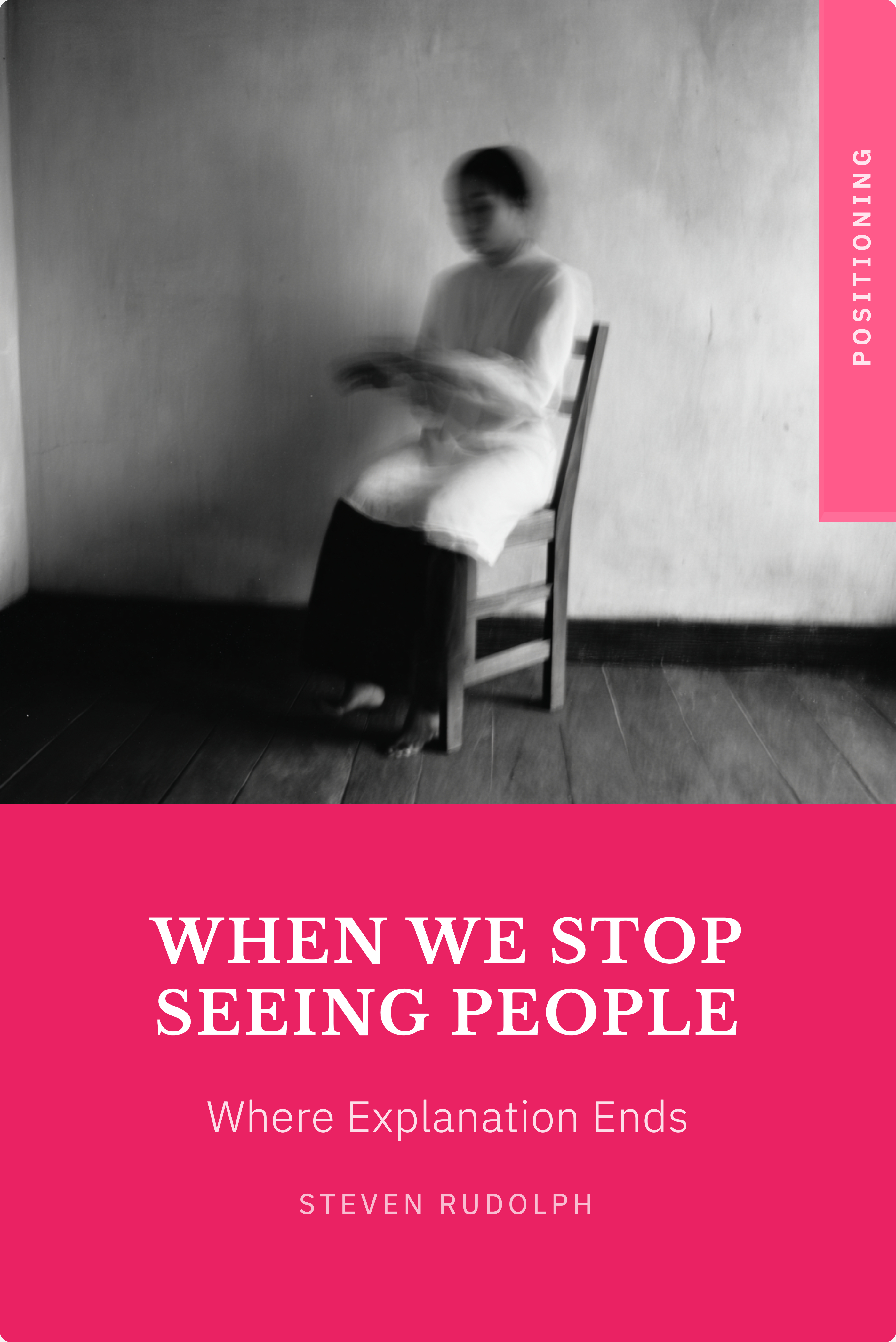
When We Stop Seeing People
Where Explanation Ends
When did understanding someone become a way of not seeing them?
Labels don’t describe people—they replace them. The moment we explain someone, curiosity closes. You stop asking questions because you think you already know. The person disappears inside your understanding of them.
This book exposes the moment when explanation replaces observation. It traces how labels arrive, how competence becomes proof, and how frameworks that were meant to help you see can actually close your eyes—becoming the very thing they were meant to prevent.
It explores how to see without fixing, categorizing, or concluding. How to hold evidence without treating it as essence. How to orient toward a person without defining them.
What’s Inside
- When Behavior Is Taken at Face Value
- Why Explanation Feels Like Understanding
- How Labels Arrive
- The Cost of Being Understood
- Seeing Without Fixing
- When Competence Becomes Proof
- Context
- Fit
- When Frameworks Press Too Hard
- Patterns That Don’t Point
- Evidence Is Not Essence
- The Limits of Explanation
- Orientation
- Stop
Who This Is For
- Practitioners who use frameworks and want to ensure they’re still seeing people, not just categorizing them
- Therapists and coaches who notice that their understanding of a client has stopped evolving
- Leaders who want to hold what they see about people without it becoming a fixed conclusion
- Anyone who’s been on the receiving end of being “understood” in a way that closed rather than opened
What Shifts After Reading
You start to notice when your understanding of someone has solidified into a container—and you learn to keep it open. The book doesn’t ask you to stop understanding. It asks you to notice when understanding has replaced seeing.
Evidence is not essence. Patterns that you observe don’t define the person. This distinction changes how you hold what you know about the people you work with.